Healing Chronic Pain
Georgie Oldfield MCSP is a leading physiotherapist and chronic pain specialist promoting a pioneering approach to resolving chronic pain through her SIRPA Recovery Programme and her clinics in London and Yorkshire
"What if your purpose isn’t a single grand answer waiting to be found, but something that becomes clearer when you slow down enough to listen to yourself? And what if it changes as you move through different seasons of life?
I never really understood what ‘purpose’ was until my mid-40s. Before then, I hadn’t given it much thought. I tended to go with the flow, responding to whatever was happening in my life. Looking back, though, I can see that purpose was there all along. It showed up in the things that lit my fire, the questions I couldn’t let go of, and the problems I felt compelled to put right.
The early clues

Being an Air Force child meant moving around a lot before I was sent to boarding school in Devon. As a shy child and a ‘Mummy’s girl’, I found this challenging and didn’t really begin to enjoy school until sixth form. I had no idea what I wanted to do when I grew up, so I chose A-level subjects I enjoyed. Without realising it, I was following my first clue: doing what I enjoyed.

My mother had briefly been a physiotherapist before marrying my father and moving abroad with the RAF. She always thought I would make a good physiotherapist. I also considered marine biology, but chose physiotherapy partly because NHS jobs were easier to find. It was a practical rather than passionate decision, but it put me in a career where I could help people, something that turned out to matter more than I realised.
After my first physiotherapy job in Somerset, I applied for a senior role in Devon, overseeing an acute musculoskeletal ward while also covering the Intensive Care Unit (ICU).
This was an important turning point. I discovered how much I loved the fast-paced ICU environment. It was the first time I remember work really lighting my fire. I completed an advanced respiratory course in London, and my interest gradually shifted towards respiratory care.
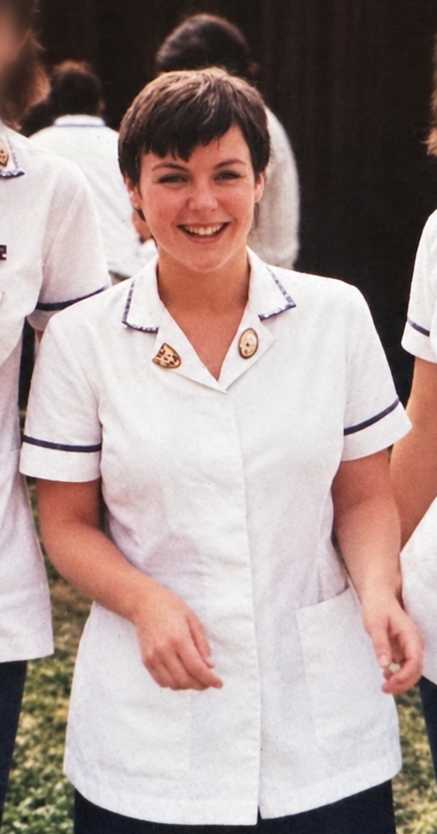
Life took another turn when I met my future husband on holiday. He lived in Yorkshire, more than 300 miles from my home in Devon, but I knew he was the ‘one’ for me. Eight months later, I moved to Yorkshire, where I have lived since then.

My first job there wasn’t respiratory work and, although I enjoyed it, I wasn’t passionate about it. I couldn’t have explained it at the time, but I was learning that for my own fulfilment I needed work I cared about, not just work I could do. When I was offered a promotion leading the respiratory physiotherapy team at a large hospital, I found myself back in a role I loved, particularly ICU, acute thoracic surgery and supervising junior staff and students.
Having my first child brought another change. I didn’t want the responsibility of a full-time managerial role while raising a young child, so I went part-time and was fortunate to secure a term-time contract. For several years, my main purpose was bringing up my children, which I loved.

I continued gaining valuable community experience and co-managed a rehabilitation unit. I wasn’t thinking about ‘purpose’ at the time, but I could feel that this work wasn’t something I wanted to do long-term because it didn’t light my fire.
Discovering a deeper purpose
When I was 40, I developed pain in my hands that made manual work increasingly difficult. My GP and I were concerned about rheumatoid arthritis, but an early diagnostic specialist reassured me that it was ‘only’ osteoarthritis. He encouraged me to continue doing what I loved, including playing tennis.
Despite the arthritic changes on my X-rays, my pain completely resolved once I realised there was nothing to be frightened of.
That experience stayed with me. I began noticing how many patients struggled not only with pain itself, but also with fear about their diagnosis, expectations that they would get worse, and the complex medical explanations they received. I became increasingly interested in why pain sometimes became chronic, particularly when the prevailing view was that recovery wasn’t really possible and that we could only help people manage it.
I began training in different approaches to improve outcomes for my patients. Looking back, I can see that I had developed a strong drive to understand pain: why people experienced what they did, and whether there was something more I could do to help.
This was probably my first real awareness of purpose. It wasn’t a plan or a goal, but a pull I couldn’t ignore.
Another pivot point came in 2004 when I set up my own private practice and left the NHS a few months later. Seeing the positive difference I could make, sometimes simply by giving patients time to be heard, felt closely aligned with my growing sense of purpose in relation to my work.

I was also intrigued by the anomalies I encountered every day. Why could someone wake up with pain despite feeling fine the night before? Why might someone exercise in the gym without difficulty but develop pain picking up a pen from the floor? Why did some people experience persistent pain when scans showed no obvious physical explanation? And why did some avoid spinal surgery because their pain resolved with gentle treatment, despite structural abnormalities remaining visible on their scans?
I became tenacious about understanding these contradictions. My curiosity had stopped being a passing interest and become a driving force in my life.
After a couple of years of researching, talking to other health professionals and reading widely, I came across the work of Dr John E. Sarno, a rehabilitation specialist in New York who had developed a different understanding of chronic pain.
Reading one of his books in May 2007 was a real epiphany. Suddenly, I began to understand what might be contributing to many of my patients’ persistent pain, as well as some recurring symptoms I had experienced myself. I knew I had to explore this further.

Unable to find anyone in the UK or Europe doing this work, I contacted Dr Sarno and eventually travelled to New York to shadow him. When I returned, I developed my own recovery programme for patients based on this mindbody approach.
Seeing the often life-changing outcomes fuelled my purpose further. I knew I needed to raise awareness, help other health professionals understand the approach and challenge widely held myths about pain. Despite setbacks and considerable resistance, I established SIRPA, a training organisation, in 2010.
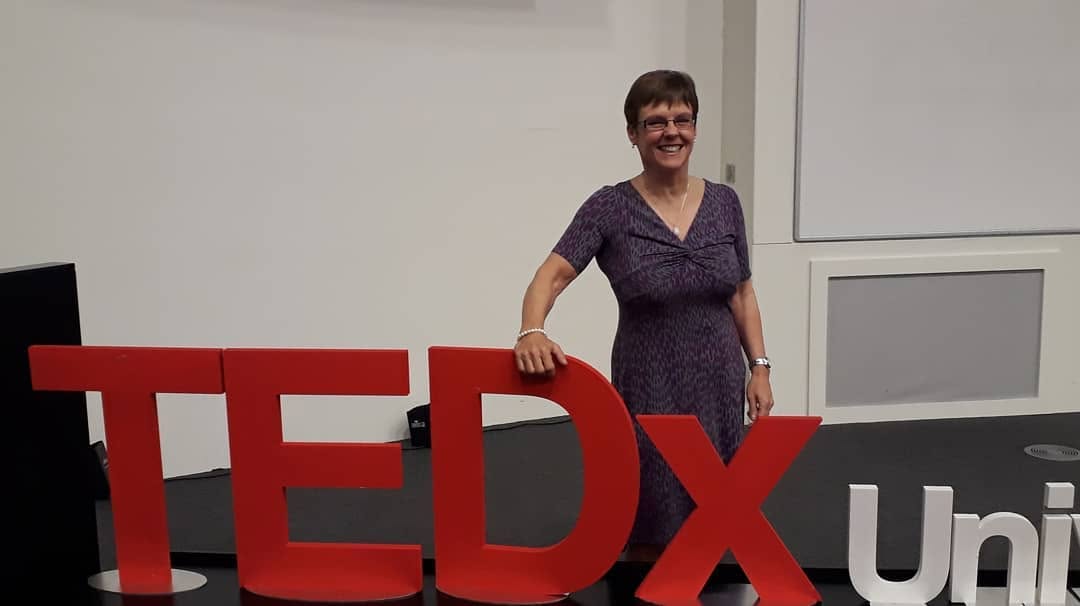
I could never have imagined myself doing something like this. Yet, by then, not doing it felt harder than facing the challenges involved. I think that is what a strong sense of purpose can do: it makes staying where you are feel harder than stepping forward.
SIRPA and our global community have evolved enormously, alongside our understanding of this approach and the science supporting it.
History shows us that changing long-held beliefs is rarely straightforward. Even when evidence supports a different way of thinking, resistance can be considerable, and acceptance may take years. Ignaz Semmelweis’s struggle to establish handwashing during childbirth is a well-known example of a new idea meeting resistance before becoming widely accepted.
Although understanding of pain and its treatment has shifted significantly over the past 15–20 years, our work has also faced considerable negativity and opposition. Having a strong sense of purpose has helped me learn from these experiences, stay motivated and continue developing our training, membership and awareness.
The clues I couldn’t see at the time
Looking back over the first half of my career, I can see that unconscious drivers were shaping my decisions long before I had a name for them.
Whenever I noticed something that could be improved, I felt compelled to act. In Devon, I worked to change the way oxygen was delivered to patients on respiratory wards because new evidence about safe practice hadn’t been implemented. In Yorkshire, I changed the protocol for postoperative thoracic patients who were remaining in bed longer than necessary, despite evidence that they should be mobilised as soon as possible.
That desire to be a changemaker was part of my purpose long before I recognised it. The most significant example was rethinking my understanding of pain, driven by the need to answer the questions my patients’ experiences raised.
My purpose wasn’t something I sat down and decided upon. It emerged through curiosity, passion and a desire to make things better.
The pressure to ‘find your purpose’
I’ve come to believe that purpose isn’t necessarily something we need to go searching for or try hard to find. In fact, trying to identify one fixed purpose can actually create unnecessary pressure and anxiety. Nor does purpose always emerge through intellectual reflection; sometimes it is something we gradually learn to recognise and feel.
For me, purpose has evolved through different seasons of life. At one stage, it was raising my children. At another, it was becoming the best physiotherapist I could be. Later, it became understanding chronic pain and finding different ways to help people, before developing into a desire to share that understanding with the public and other health professionals.
Purpose has given me the drive to move forward and overcome challenges because, underneath it all, I have felt that this is what I am meant to be doing.
I also believe that slowing down helps us recognise that sense of purpose. Constant busyness, expectations and external noise can disconnect us from what feels meaningful. Making space through walking, spending time in nature, meditation, yoga, breathwork or simply sitting quietly can help us listen more closely to ourselves.

Perhaps, instead of always asking, ‘What is my purpose in life?’, a more useful question could be:
What is asking for my attention in this season of my life?
That question feels particularly relevant to me now. As I approach the later stages of my working life and reduce my workload, I can feel my purpose changing again. I remain passionate about my field, but leading a training organisation no longer feels like the right way to use my energy.
When I ask myself what is asking for my attention now, I have a real sense that I am ready to find the right person, or people, to take over SIRPA. This would give me more space for creative projects, both work and play, and allow me to spend more time with my children and the rest of my family in Devon.
Perhaps purpose isn’t a destination we eventually arrive at. Perhaps it is more like a thread running through our lives: sometimes obvious, sometimes hidden, sometimes changing direction, but easier to recognise when we look back.
I didn’t know I had a purpose when I chose my A-levels, applied for my first jobs, became a mother or changed direction in my career. But now I can see it was there all along.
It was there in my curiosity, my desire to make things better and the things that lit my fire. And perhaps most importantly, it was there in those moments when I simply knew I had to follow something that mattered deeply to me.
Chronic Pain: Your Key to Recovery by Georgie Oldfield is published by 2QT Limited
Can you really cure chronic pain without drugs, surgery or therapy? Surprisingly often the answer is Yes. While chronic pain can have a physical cause, this book, written by a leading UK Physiotherapist and chronic pain specialist, reveals how very real, and even debilitating pain, can frequently be caused by our brain in response to repressed emotions as a result of current and even past experiences. This process is at the root of many common complaints, including back pain, sciatica, migraines, fibromyalgia, repetitive strain injuries, digestive disorders and many medically unexplained symptoms.
This self-empowering book explains research findings, describes dozens of case studies and provides practical tools to help identify the cause of pain and show the path that leads to relief once and for all.
https://youtube.com/@georgieoldfieldsirpa?si=Kc8AnTWI8wRjINGW

